DEMOCRATS SEIZE CONTROL OF HOUSE AND SENATE IN SWEEPING MIDTERM REBUKE, BOXING IN TRUMP FOR FINAL TWO YEARS
WASHINGTON — Voters delivered a decisive midterm realignment on Tuesday night, with major networks and decision desks projecting that Democrats have flipped control of both the U.S. House of Representatives and the U.S. Senate.
As late-night ballot counting continues in dozens of uncalled contests nationwide, Democrats have officially crossed the 218-seat threshold required for a House majority while capturing the net four GOP-held seats needed to reclaim the Senate gavel. According to CBS News House Live Updates, Republicans failed to defend their narrow House majority as voters reacted to persistent affordability concerns, rising everyday costs tied to President Donald Trump's tariffs, and the ongoing conflict with Iran.
The dual-chamber flip ends two years of unified Republican rule in Washington, guaranteeing that the remainder of President Trump’s second term will be defined by divided government, aggressive congressional oversight, and high-stakes showdowns over the federal budget and the judiciary.
Trump Reacts: ‘I Have Total Veto Power’
In a late-night phone interview with CBS News, President Trump congratulated Democrats on their midterm victories and signaled a shift toward defensive governance anchored by the presidential veto pen.
"My message is, congratulations to the Democrats, and I look forward to working with you for the good of our country," Trump told CBS News, adding, "I know a lot of Democrats. I have total veto power and I'm sure we'll be able to work things out". Warning that the new majority would need to compromise with the White House, he added, "I think they're gonna want to work with me. Otherwise I'd just veto everything and they're not gonna want that".
In the same call with CBS News, Trump attributed the widespread Republican defeats to his own absence from the ticket, stating, "I feel that I wasn't on the ballot, and there was nothing that could be done about that. If I was, we would have won".
How the Senate Flipped: Major Upsets and Key Holds
With 35 of the chamber's 100 seats on the ballot this cycle, Democrats needed a net gain of four seats to overcome the 53–47 Republican majority. According to CBS News Senate Live Updates and PBS News, Democrats secured control of the upper chamber by toppling Republican incumbents and flipping open seats across traditional GOP strongholds while defending their own vulnerable turf:
Democratic Senate Pickups:
Kansas & Texas: In one of the night's biggest upsets, Time and CBS News Senate Live Updates reported that Democrat Rev. Adam Hamilton defeated Trump-backed Republican incumbent Sen. Roger Marshall in Kansas, becoming the first Democrat elected to the Senate from the state since 1932. In Texas, Democratic state Rep. James Talarico defeated GOP Attorney General Ken Paxton to flip the seat, according to CBS News Senate Live Updates and PBS News.
Ohio, Iowa & North Carolina: According to CBS News Senate Live Updates, former Democratic Sen. Sherrod Brown defeated Republican Sen. Jon Husted in Ohio, while Democratic state Rep. Josh Turek defeated GOP Rep. Ashley Hinson in Iowa. In North Carolina, former Democratic Gov. Roy Cooper defeated Republican Michael Whatley to flip the open seat vacated by retiring GOP Sen. Thom Tillis, as reported by The Economic Times and The Times of India.
Maine & South Carolina: According to CBS News Senate Live Updates, longtime Republican Sen. Susan Collins conceded to Democratic challenger Troy Jackson in Maine, and Democrats also picked up the Senate seat in South Carolina, where Time noted Trump-endorsed Republican Sen. Darline Graham was toppled.
Democratic Senate Holds:
According to CBS News Senate Live Updates, Democratic Sen. Jon Ossoff won reelection in Georgia—the sole Democratic incumbent running in a state Trump carried in 2024—while Democratic Rep. Chris Pappas defeated former GOP Sen. John Sununu to hold New Hampshire's open seat.
Additional Democratic Senate winners projected by CBS News Senate Live Updates, CBS News, and The Economic Times include Illinois Lt. Gov. Juliana Stratton, Minnesota's Peggy Flanagan, and incumbents Mark Warner (Virginia), Cory Booker (New Jersey), Ed Markey (Massachusetts), and Ben Ray Luján (New Mexico).
Republican Senate Holds:
Republicans defended several seats across the South and Plains. In Louisiana, Republican Julia Letlow defeated Democrat Jamie Davis. Furthermore, CBS News Senate Live Updates, CBS News House Live Updates, and CBS News Miami projected Republican victories for Sen. Ashley Moody in Florida (defeating Democrat Angie Nixon), Rep. Kevin Hern in Oklahoma, and Rep. Andy Barr in Kentucky.
The House Realignment and Statehouse Sweeps
With all 435 House seats up for election, Democrats needed a tiny net gain to overturn the narrow 218–214 Republican majority. While dozens of House contests remain uncalled as ballot counting continues, Democrats have already clinched more than the 218 seats needed for a majority:
Battleground House Flips: According to PBS News and The Economic Times, Democrats ousted three Republican incumbents in Pennsylvania—with Bob Brooks defeating Ryan Mackenzie (PA-07), Paige Cognetti defeating Rob Bresnahan Jr. (PA-08), and Janelle Stelson defeating Scott Perry (PA-10)—while Rebecca Bennett unseated GOP Rep. Tom Kean Jr. in New Jersey.
Midwest and Southern Gains: CBS News House Live Updates and CBS News Senate Live Updates reported that Democrats flipped two seats in Iowa—with Christina Bohannan unseating GOP Rep. Mariannette Miller-Meeks (IA-01) and Lindsay James defeating Republican Joe Mitchell (IA-02)—alongside Denise Powell flipping the open Nebraska seat held by GOP Rep. Don Bacon, Bobby Pulido unseating GOP Rep. Monica De La Cruz in South Texas, and Zach Dembo defeating Republican Ralph Alvarado in Kentucky's 6th District. CBS News Senate Live Updates also noted that GOP Reps. Max Miller in Ohio and Derrick Van Orden in Wisconsin lost reelection.
Democratic & Republican House Holds: According to CBS News House Live Updates and The Economic Times, Democratic incumbents winning reelection include Greg Landsman (OH-01), Josh Riley (NY-19), Jared Moskowitz (FL-25), Joseph Morelle (NY-25), and Bill Foster (IL-11), alongside open-seat wins for Pia Dandiya (FL-22), Stefany Shaheen (NH-01), Claire Valdez (NY-07), Darializa Avila Chevalier (NY-13), Chris Rabb (PA-03), Adam Hamawy (NJ-12), and Melat Kiros (CO-01). On the Republican side, CBS News Texas reported incumbent GOP Rep. Nathaniel Moran won reelection in Texas's 1st District.
Gubernatorial Shifts: The midterm wave extended to state capitals. In Texas, CBS News Texas and Time reported that three-term Republican Gov. Greg Abbott conceded to Democrat Gina Hinojosa, ending a streak of Republican governorships in Texas dating back to 1995 and making Hinojosa the state's first Latina governor. According to The Guardian, Democrats also flipped governorships in Ohio (Amy Acton defeating Republican Vivek Ramaswamy), Georgia (Keisha Lance Bottoms becoming the first Black woman elected governor in U.S. history), and Iowa (Rob Sand), while Deb Haaland won in New Mexico to become the nation's first female Native American governor and Democratic Gov. JB Pritzker won a third term in Illinois over Republican Darren Bailey, per CBS News Chicago. In Florida, Republicans held the governorship as Byron Donalds defeated Democrat David Jolly to succeed term-limited GOP Gov. Ron DeSantis, while Republican Attorney General James Uthmeier also won a full term, according to CBS News Miami.
What a Fully Democratic Congress Means for Trump
With Democrats set to take the gavels in both chambers when the new Congress convenes in January, the political and constitutional landscape for the White House changes immediately:
The End of the Conservative Legislative Slate: Losing both chambers halts the administration's ability to pass partisan legislation. Democratic leaders will control committee schedules and floor calendars, sidelining White House proposals on tax cuts, deregulation, and border statutes while passing Democratic bills on healthcare affordability and consumer costs—setting up the exact veto showdowns Trump previewed on election night.
Unilateral Subpoena Power and Investigations: Majority control in both the House and Senate hands Democratic committee chairs sweeping investigative authority and subpoena power. The administration faces immediate scrutiny over the execution and economic fallout of its tariff policies, the conduct of the war with Iran, Justice Department and regulatory operations, and executive ethics.
A Blockade on Conservative Judges and Confirmations: Reclaiming the Senate majority gives Democrats exclusive gatekeeping power over presidential appointments. A Democratic-led Senate Judiciary Committee can block conservative nominees to federal district and appeals courts—and any potential Supreme Court vacancy—while forcing the White House to put forward consensus moderates for Cabinet and regulatory posts.
High-Stakes Budget and Spending Leverage: Because all spending measures originate in the House, Democratic majorities will dictate the starting baseline for federal appropriations. To fund federal agencies and address debt ceiling deadlines, President Trump will have to negotiate bipartisan spending packages with Democratic leadership, giving Congress the leverage to block administrative budget cuts and restrict executive-branch funding reallocations.
Comments
Related Articles
World
King Charles calls slave trade a 'shameful chapter' at Commonwealth summit in Antigua but does not apologise
King Charles III told Commonwealth leaders in Antigua and Barbuda that the transatlantic slave trade was a "shameful chapter of history" and expressed personal sorrow, but did not issue a formal apology. Prime Minister Andy Burnham has said he is open to an apology but has ruled out reparations.
World
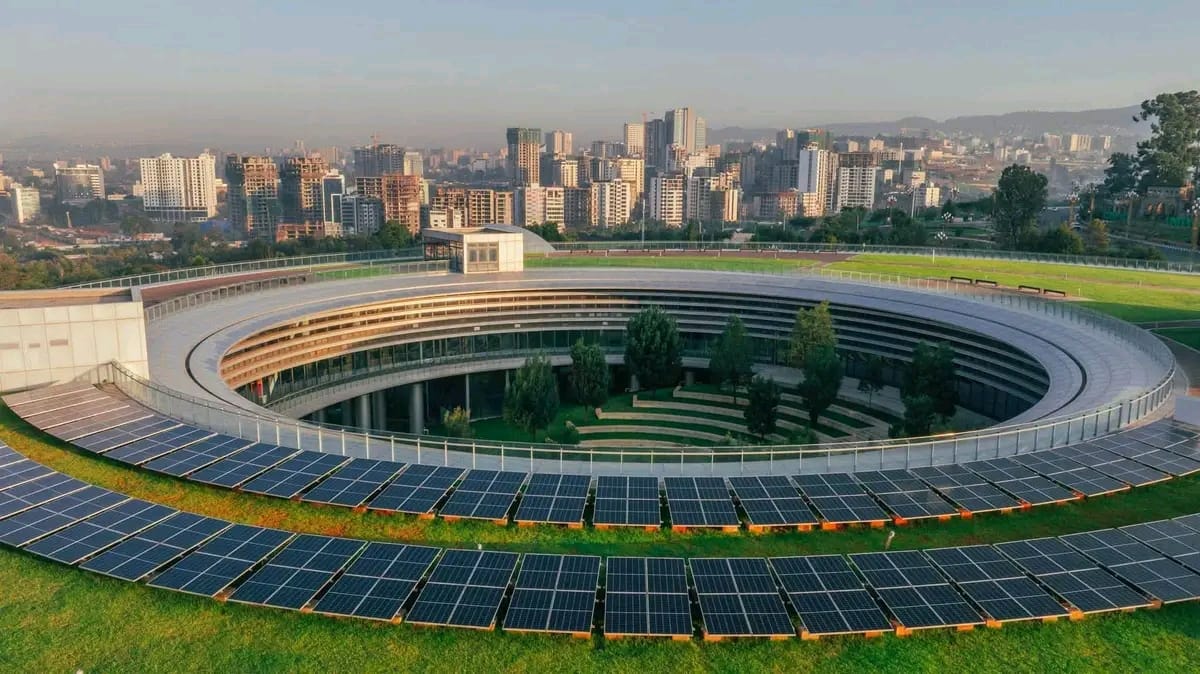
Addis Ababa Prepares to Host Major Health Conferences Amid Broader Urban Renewal
Addis Ababa is set to host major international health assemblies, including CPHIA 2026 and a WHO global meeting, alongside continental summits on early warning systems and sustainable urban development.

World