Lula wins fourth term in Brazil runoff as Flávio Bolsonaro refuses to concede and seeks annulment
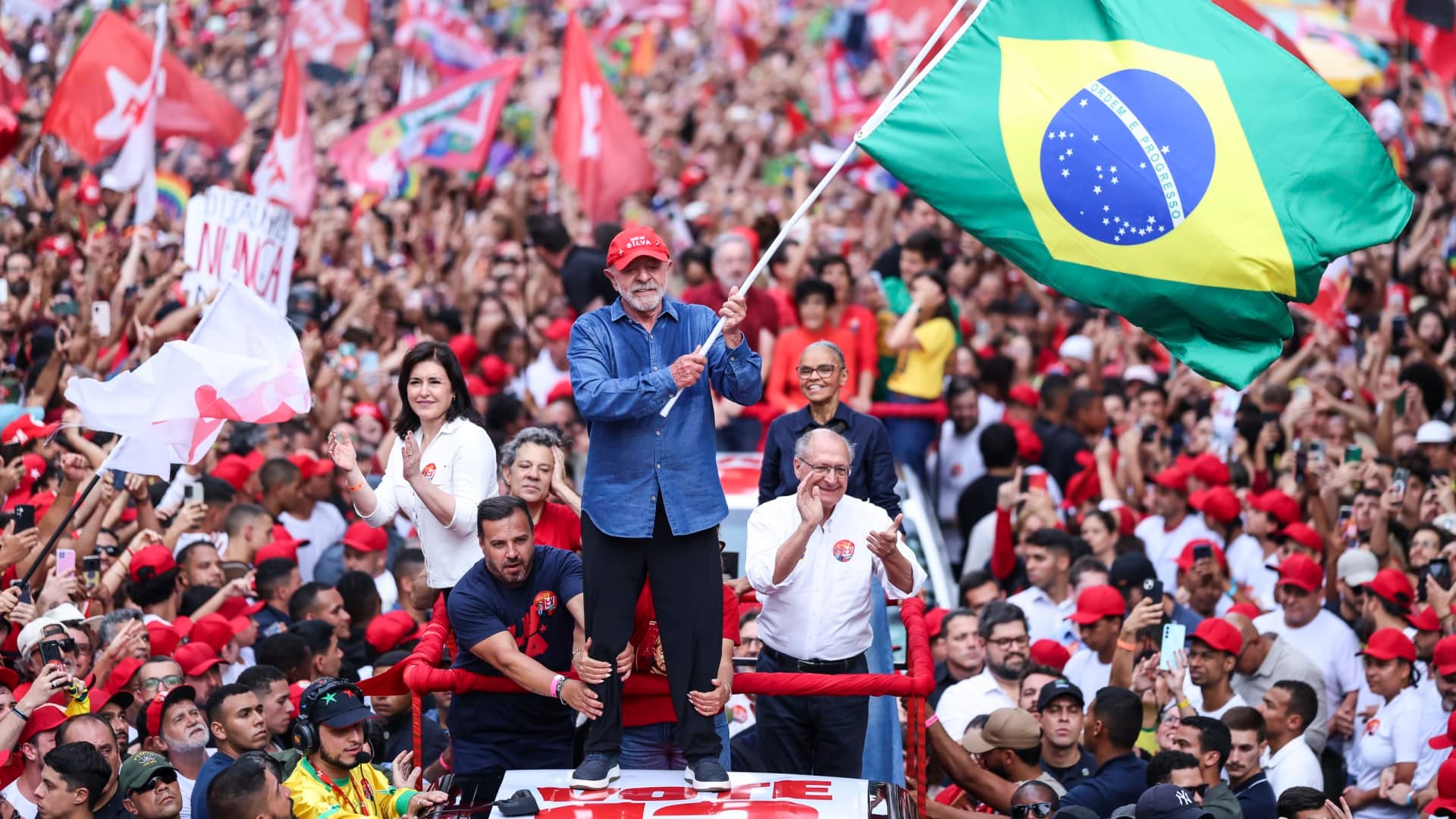
Luiz Inácio Lula da Silva won a fourth term as Brazil's president on Sunday. He defeated far-right Senator Flávio Bolsonaro in a runoff with 51.8% of valid votes to Bolsonaro's 48.2%, according to Superior Electoral Court figures reported by CNBC. Capital FM, citing official results, reported the same shares and dated the runoff Oct. 25. Bolsonaro refused to concede and said he would seek to have the result annulled, CNBC reported, citing Reuters.
The outcome keeps Latin America's largest economy under a left-of-center government that has openly clashed with U.S. President Donald Trump. It is also the second consecutive presidential election to put Brazil's institutions under strain. In 2022, Lula defeated Bolsonaro's father, Jair Bolsonaro, who was later convicted of attempting a coup to overturn that result. The new term opens under pressure from financial markets and rising public debt.
A comeback from second place
Lula's win reverses the result of the first round, held on Oct. 4 according to Capital FM, when Bolsonaro finished ahead by about 2.2 million votes. CBS News put the first-round split at 47% to 45%. Capital FM gave more precise figures: 47.03% for Bolsonaro and 45.16% for Lula. The Guardian described the gap as less than 2% of the vote and the narrowest ever recorded in a first round.
CNBC, CBS News and Capital FM all reported that this is the first time a candidate has won the presidency after finishing second in the first round. CNBC counted from Brazil's return to direct presidential elections in 1989. CBS News counted from the end of the military dictatorship in 1985. Capital FM also reported that Lula is the first president since the return to democracy to win four presidential elections by direct popular vote.
Between the two rounds, Lula's campaign concentrated on the cost of living, workers' rights, social welfare programs and the defense of democratic institutions, and targeted undecided and lower-income voters, according to Capital FM.
With all votes counted, Lula led by nearly 4.4 million votes, CBS News reported. In the first round, more than 33 million of nearly 160 million registered voters stayed home, according to ABC News and CBS News. The Guardian reported that abstention in that round reached a record high and fell disproportionately on Lula's supporters.
Dispute over extended voting
Bolsonaro's challenge centers on a ruling by Supreme Court Justice Cristiano Zanin to keep polls open for two more hours. Polls had been due to close nationwide at 5 p.m. Brasília time. Reports differ on when the order came:
- CBS News reported that Zanin ruled three minutes before the scheduled close.
- ABC News reported that he ruled shortly after polls had closed.
Both campaigns had asked for more time. Lula's campaign cited problems with buses that carry voters to the polls. CBS News named São Paulo and Salvador, two cities that tend to favor Lula, while ABC News reported bus problems in nine states. Bolsonaro's campaign cited heavy rain in the south, where he is strong. Capital FM reported that the court authorized the extension in response to concerns about voters' access to polling stations.
The order caused confusion on the ground, according to ABC News and CBS News. At one counting site in Brasília, most volunteers had left 15 to 20 minutes after closing. At a polling station in Rio de Janeiro, voting machines had already been switched off and could not be restarted. CBS News reported that it was unclear how many stations stayed open.
Bolsonaro called the extension "unacceptable," CNBC reported, citing Reuters. Bolsonaro ally Nikolas Ferreira pointed out that Zanin had previously served as Lula's lawyer, according to CBS News.
Victory speech and reaction
In his victory speech, Lula called the result a defeat for denialism and lies and promised to respect all Brazilians. He also returned to the theme of national sovereignty that ran through his campaign. "This country will not accept being anyone's backyard," he said, according to CBS News.
Supporters celebrated in major cities, Capital FM reported, particularly in São Paulo, where Lula followed the count.
Earlier on Sunday, Trump declined to back either candidate. "We are watching," he told reporters, ABC News reported. Peru's president, Keiko Fujimori, and Uruguay's president, Yamandú Orsi, congratulated Lula, CNBC reported.
Markets reacted sharply. The iShares MSCI Brazil exchange-traded fund fell nearly 20% in overnight trading, CNBC reported, adding that investors had seen Bolsonaro as more likely to pursue austerity and deregulation. Citing the Central Bank of Brazil, CNBC reported that gross public debt reached 82.9% of GDP in August, the highest level since March 2021.
Background
Lula, 80, a leader of the Workers' Party, first governed Brazil from 2003 to 2010. He was jailed in 2018 on corruption convictions that the Supreme Court later annulled, and returned to defeat Jair Bolsonaro in 2022, taking office again in January 2023, Capital FM reported.
Jair Bolsonaro is serving a 27-year sentence under house arrest for the coup attempt, The Guardian reported. Flávio Bolsonaro, 45, had promised to pardon his father or seek amnesty for him if elected.
The younger Bolsonaro remains under investigation. CBS News reported that an inquiry concerns his admission that he accepted about $12 million from former banker Daniel Vorcaro to fund a film about his father. The Guardian reported that he is the subject of two federal police inquiries over alleged corruption and money laundering.
According to The Guardian, right-wing candidates had won all seven presidential elections held in Latin America since Trump began his second term. ABC News reported that Trump allies won this year in Chile, Peru and Colombia.
What comes next
Lula's new term begins on Jan. 5, 2027, according to CBS News and Capital FM. He will face a Congress in which Bolsonaro's Liberal Party holds its largest bench in decades, CNBC reported. Goldman Sachs analysts cited by CNBC expect modest spending restraint and higher taxes rather than major structural reform. Capital FM listed high interest rates and concerns about household spending among the economic pressures facing the government, alongside public debt. The immediate question is whether Bolsonaro files a formal legal challenge to the extended voting, and how the courts respond if he does.
Sources: CNBC – World, Reuters – World, CBS News – World, ABC News – International, The Guardian – World, Nation (Kenya), Addis Standard, Reuters – World, Capital FM (Kenya)
Picture: CNBC – World
Comments
Related Articles
World
Addis Ababa Prepares to Host Major Health Conferences Amid Broader Urban Renewal
Addis Ababa is set to host major international health assemblies, including CPHIA 2026 and a WHO global meeting, alongside continental summits on early warning systems and sustainable urban development.

World
Nine Dead After Private Jet Crashes in South Florida
All nine people aboard a private business jet were killed after the aircraft crashed into a roadway in Palm Beach County, Florida. Federal investigators are probing the disaster, which damaged local infrastructure and forced hundreds of nearby residents to evacuate.
World