Opinion
Rights lawyer attributes TPLF faction's Tigray reversal to lost public support and failed alliances
Share:
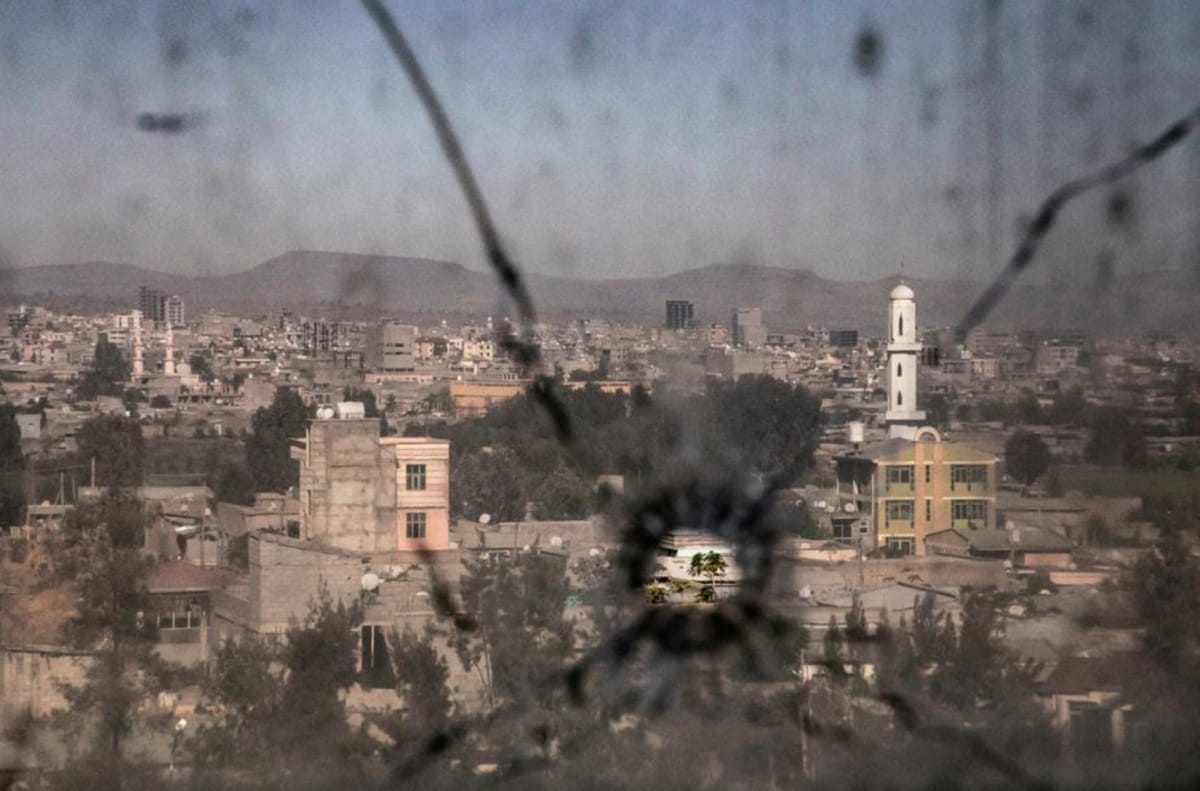
An Ethiopian human rights lawyer has argued that the Tigray People's Liberation Front (TPLF) faction led by Debretsion Gebremichael lost much of its political, military and diplomatic standing within roughly a month of renewed fighting. In his view, the faction misjudged regional alliances, overestimated its own strength and lost the backing of ordinary Tigrayans.
Getachew Temare describes himself as a lawyer, human rights defender and peacebuilder. He set out his argument in a thread on his X (formerly Twitter) account, which was later republished as commentary on journalist Martin Plaut's website. The piece is his personal assessment. Addis Gazette has not independently verified several of the events it describes.
Getachew contends that a month before the fighting began, the faction still held Tigray's main cities and institutions. It also commanded an organised armed force and retained bargaining power under the Pretoria peace agreement, despite growing public resentment. He links its rapid decline to three mutually reinforcing failures:
According to the commentary, a political project known as Tsimdo took its current shape after a meeting in Port Sudan in May 2026 involving Ethiopian opposition figures and Eritrean representatives. Getachew writes that Tsimdo failed to win over Tigrayans and was later recast as a wider coalition. On September 20, he says, seven groups, including the TPLF, Fano and the Oromo Liberation Army (OLA), announced an "Alliance for Survival" aimed at removing Prime Minister Abiy Ahmed's government.
Getachew is sceptical of that coalition. "Hostility toward a common enemy does not constitute a coherent political or military strategy," he wrote.
He singles out the Eritrean link as especially damaging, noting that Eritrean forces were accused of grave abuses in Tigray during the previous war. He also cites reports that Eritrean troops advanced as far as Adigrat and Idaga Hamus on October 7 and 8 before pulling back, while acknowledging that operational details remain disputed.
On the diplomatic front, he argues that by joining a coalition seeking regime change, the TPLF gave up its standing as a governing authority and a signatory to the Pretoria agreement. As a result, he says, international actors found it harder to distinguish the TPLF from Fano and the OLA.
Getachew says the faction underestimated federal airpower, mechanised units and manpower. He writes that it also overestimated its own cohesion, pointing to fighters of the Tigray Peace Force who joined federal operations. He gives the following sequence of events:
He cautions that the war is not necessarily over. In his assessment, the TPLF could still sustain an insurgency, although it no longer has the institutional base needed to govern.
Getachew describes popular consent as the least discussed of the three factors. He argues that years of authoritarian practices, coercive recruitment and factional disputes had weakened the organisation's social base. He says that in June he examined a TPLF wartime proclamation containing provisions for coercive mobilisation and restrictions on dissent.
He stresses that rejecting the TPLF does not amount to supporting the federal government. "Tigrayans can reject both internal authoritarianism and external domination," he wrote.
Neither the TPLF nor the federal government had publicly responded to the arguments in the piece at the time of publication.
Source: Martin Plaut (commentary)
Picture: Martin Plaut (commentary)