The Reporter Revisits Haile Selassie's Legacy in Education and the Press
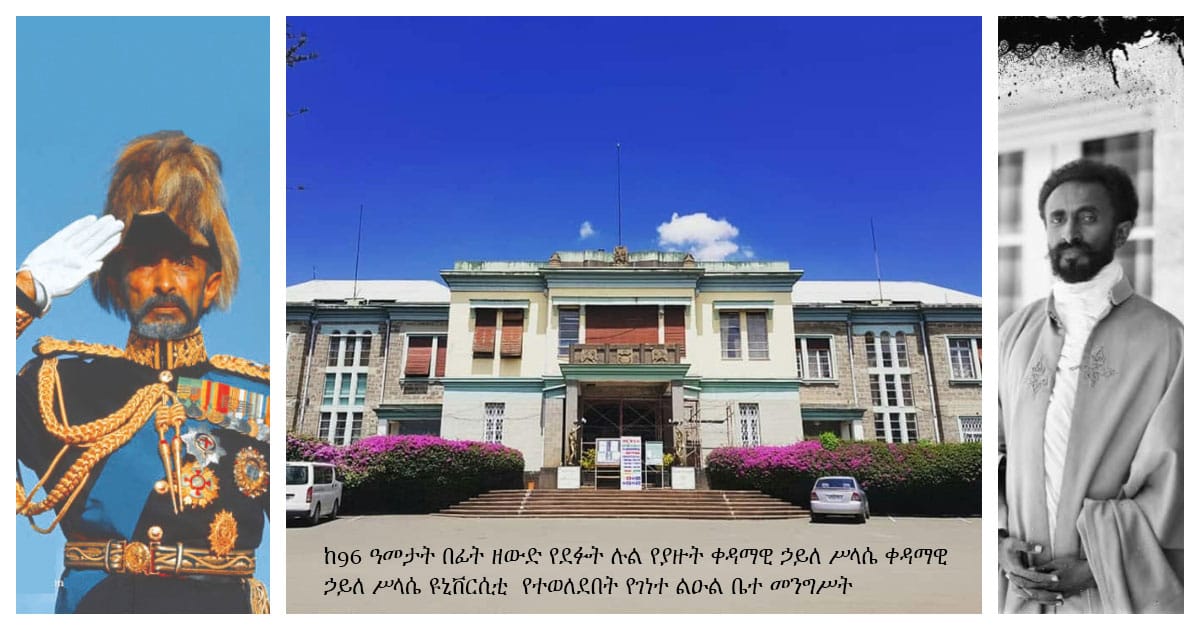
The Reporter, one of Ethiopia's leading private newspapers, has published an Amharic-language feature reassessing the role of Emperor Haile Selassie I in building the country's modern education system and organising its press. The piece is titled, in translation, "The Pioneering Emperor: In the Light of Education and the Order of the Press."
According to the article's opening, Ethiopia's development during its modern history rested on two main pillars: producing a capable, educated workforce and making information accessible to the public. The feature frames these as the means by which the country sought to defend its sovereignty through diplomacy and knowledge. It then turns to the reign that formally began with Haile Selassie's coronation on Tikimt 23, 1923 in the Ethiopian calendar, which corresponds to November 2, 1930.
A familiar historical record
The full text of the feature was not available to Addis Gazette. Its themes, however, touch on a well-documented period in Ethiopian history. Before he took the throne, Haile Selassie, then known as Ras Tafari Makonnen, was associated with several early modernising projects:
- The founding in the mid-1920s of the Tafari Makonnen School in Addis Ababa, one of the country's first modern secondary-level institutions.
- The establishment of a printing house and the weekly Amharic newspaper Berhanena Selam ("Light and Peace"), which became an important early vehicle for government-endorsed public information.
After the Italian occupation ended in 1941, the imperial government expanded state media. The Amharic daily Addis Zemen and the English-language Ethiopian Herald date from the early 1940s. Higher education followed with the opening of the University College of Addis Ababa in 1950. That institution later became the core of Haile Selassie I University, which is known today as Addis Ababa University.
The emperor also sent students abroad for training. Many of these graduates went on to staff ministries, schools and diplomatic missions. Supporters of his legacy often cite this as evidence of a deliberate investment in human capital.
A legacy still debated
Assessments of Haile Selassie's record in these areas remain divided. Admirers credit him with laying the institutional foundations of modern schooling, publishing and journalism in Ethiopia. Historians and critics point to other features of the period. Modern education reached only a small share of the population, concentrated largely in urban centres and among elites. The press operated under close state control and censorship, and it served mainly to communicate official positions rather than to scrutinise power.
Some observers also note an irony. Students educated in the institutions the emperor founded became central to the protest movements of the 1960s and early 1970s, which helped bring about the end of the monarchy in 1974.
Renewed interest in the imperial era
The Reporter's feature reflects a broader public interest in reexamining Ethiopia's imperial past. Debates over the country's history, including the contributions and failings of its former rulers, remain prominent in Ethiopian media and political discussion.
For the press, the question carries particular weight. Ethiopian journalists and media organisations continue to discuss the balance between state influence and editorial independence. Those discussions trace their roots, in part, to the newspapers and printing houses established during Haile Selassie's long rule.
Source: The Reporter – Amharic
Picture: The Reporter – Amharic
Related Articles
Lifestyle
Ethiopia's Mental Health Care Turns Toward the Voices of Those It Serves
A recent Capital Ethiopia report highlights a growing focus on the experiences of patients, families and communities in Ethiopia's mental health care. The shift comes as the country works to extend scarce specialist services beyond major hospitals.
Lifestyle
Addis Ababa Opens Kechene, Bambis Section of Riverside Development Project
Prime Minister Abiy Ahmed has inaugurated a new section of Addis Ababa's riverside redevelopment programme, running from Kechene to Bambis, state-affiliated broadcaster Fana reported. Mayor Adanech Abebe said the project aims to improve residents' living conditions.