Ethiopia receives 12 Russian Su-35 jets, Abiy says, as Red Sea coastal states draw closer
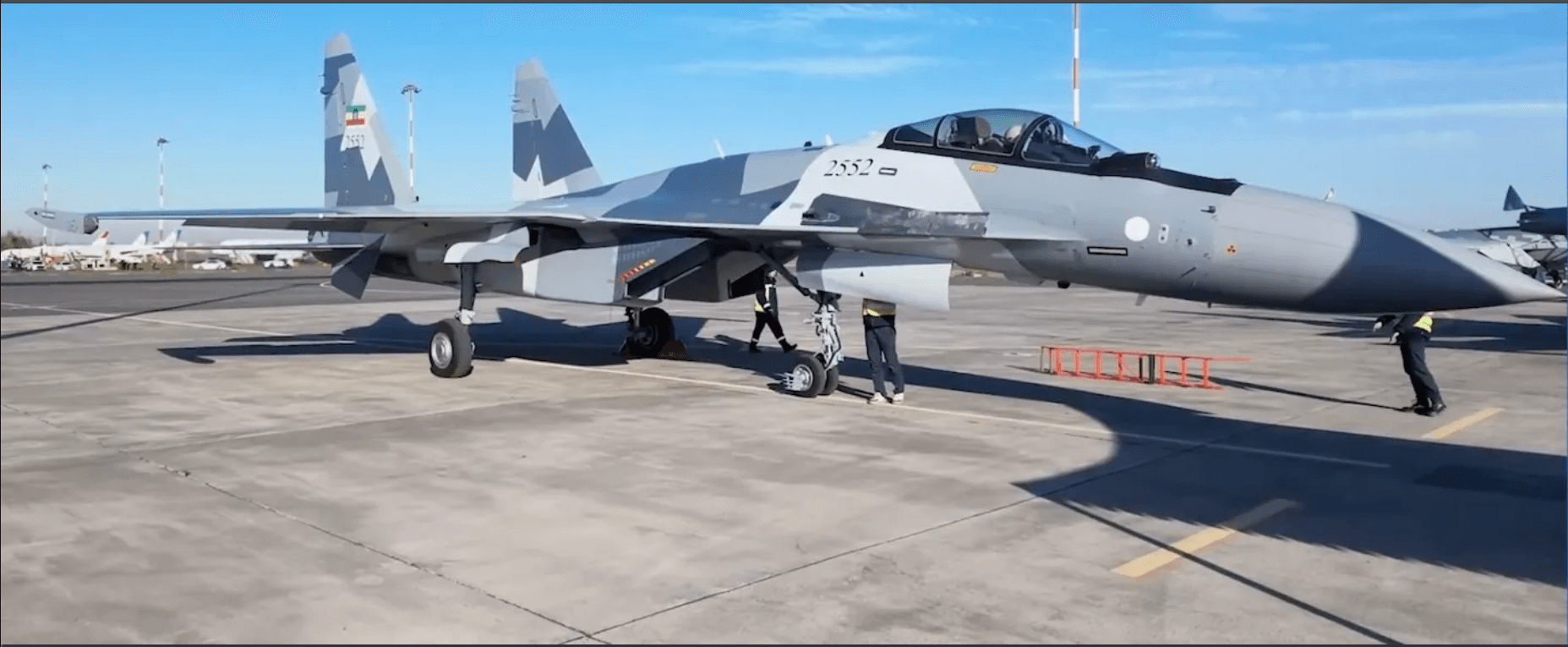
Ethiopian Prime Minister Abiy Ahmed said Ethiopia has taken delivery of 12 Russian Su-35 fighter jets and will acquire four S-400 air-defence batteries. He made the announcement on Wednesday, including in a post on X, while in Moscow for the Russia–Africa Summit, Anadolu Agency reported. Reuters, TRT Afrika, the state-run Ethiopian News Agency and the Eritrean exile outlet Setit also reported the announcement. The delivery has not been independently confirmed.
In a statement reported by Addis Standard and republished by AllAfrica, Abiy said the jets were the first 12 Su-35s delivered under an earlier agreement with the Russian government. He thanked Russian President Vladimir Putin for the early handover, saying the aircraft had arrived “a year ahead of our agreed schedule.” Anadolu Agency reported the same remark. According to Addis Standard, Abiy said the acquisition meant Ethiopia had “taken the lead among Sub-Saharan African nations” and that the growing readiness of its armed forces would allow the country to “preemptively deter aggression.”
The announcement comes as relations with Egypt remain strained over the Grand Ethiopian Renaissance Dam (GERD), and as Ethiopia’s push for access to the Red Sea has drawn a joint response from coastal states, including Egypt and Eritrea. Anadolu Agency reported that it also comes amid rising tensions with Eritrea and renewed fighting in Ethiopia’s northern Tigray region, which have raised fears of a wider conflict.
The aircraft and the missiles
The Su-35 is a multirole fighter designed for air-to-air combat and ground attack. Abiy described the jets as “4++ generation” aircraft, according to Addis Standard. The S-400 is a long-range surface-to-air missile system designed to intercept aircraft and some missile threats.
Setit wrote that the jets could strengthen Ethiopia’s ability to protect strategic sites such as the GERD from air attack. It added that their usefulness would depend on maintenance, training and logistics, and on how well they are integrated into Ethiopia’s existing defences.
Reports of the delivery rest on Abiy’s own announcement. According to Addis Standard, he did not disclose the financial value or terms of the Su-35 deal, the delivery schedule for the S-400 batteries, or when the air-defence systems would enter service.
A growing Russian-supplied arsenal
Addis Standard reported that the Su-35s follow a series of reported Russian arms transfers to Ethiopia in recent years. Citing the Ukrainian defence publication Defense Express, it said Russia had delivered up to six Yak-130 jet trainer and light combat aircraft, which were seen at the Bishoftu airbase in January 2026.
Defense Express also reported the delivery of at least one Russian Orion reconnaissance and strike drone. That delivery remains unconfirmed. In an October 2026 analysis, the same publication said footage cited as evidence may show a different aircraft, possibly the Ethiopian-developed Negash.
Addis Standard said Ethiopia’s other Russian-made systems include the Krasukha-4 mobile electronic warfare system, which was displayed at a military anniversary event in Addis Ababa in October 2023. Citing arms-transfer data from the Stockholm International Peace Research Institute (SIPRI) as summarised by Risk Book, the outlet also listed about four Pantsir-S1 air-defence systems delivered in 2019. Defense Express has separately reported that Ethiopia acquired Chinese-made FK-2000 air-defence systems, with at least two units seen in footage circulated in September 2026.
According to Defense Express, as cited by Addis Standard, Ethiopia’s combat fleet has included Su-27 fighters bought in the 1990s, two Su-30K aircraft delivered in January 2024, and older Su-25 ground-attack jets and MiG-23BN fighters. Risk Book data cited by the outlet show that Russia was Ethiopia’s largest supplier of major arms by volume between 2016 and 2025, accounting for 43% of deliveries, followed by Ukraine with 25%. Aircraft made up 34% of Ethiopia’s major arms imports over the period.
Addis Standard also reported that Russia’s deputy defence minister, Vasily Osmakov, met Ethiopian Air Force commander Lieutenant General Yilma Merdassa in Moscow in March to discuss defence cooperation. In October 2025, after talks with Ethiopian Foreign Minister Gedion Timotheos, Russian Foreign Minister Sergey Lavrov said Moscow was ready to align military cooperation with Ethiopia’s priorities, the outlet reported.
Reaction in Cairo
Egypt has not publicly commented on the deliveries. The state-run Ethiopian News Agency reported that an Israeli researcher, whom it did not name, said the Su-35 acquisition had caused anxiety in Egyptian circles.
Russia is also a long-standing arms supplier to Egypt, which has bought MiG-29 fighters from Moscow. Setit cited reports that Cairo reached a new fighter-jet agreement with Russia during the same summit. That deal has not been confirmed.
Setit described Moscow’s approach as maintaining defence partnerships with competing regional powers rather than siding with one, which it said allows Russia to expand arms exports and influence along a strategic trade corridor.
A coastal bloc takes shape
On October 4, Egypt, Eritrea, Sudan and Somalia issued the El Alamein Declaration, which reaffirmed their commitment to sovereignty and territorial integrity and stressed that coastal states are responsible for governing the Red Sea, Setit reported. According to the outlet, Egypt has rejected any military access for non-coastal states while accepting that such states may seek commercial port access through negotiated agreements. That position bears directly on landlocked Ethiopia.
Setit also reported that Egypt has sought arrangements to develop Eritrean port facilities, including at Assab, and to host visiting Egyptian naval vessels. The outlet noted unconfirmed claims that Egypt is supplying Eritrea with advanced military equipment and that Egyptian warships are operating near Assab, and said those claims require independent verification.
Eritrea’s coastline, which includes the Dahlak Archipelago and extends south towards the Bab el-Mandeb Strait, lies along the shipping route between the Suez Canal and the Gulf of Aden. Canal revenue is a major source of income for Egypt.
Concerns at home
Setit also questioned the purchase at a time when Ethiopia faces internal armed conflicts, mass displacement, economic pressure and humanitarian needs. It noted that combat aircraft are not limited to external defence and could be used in domestic conflicts, which it described as a concern for the protection of civilians.
Anadolu Agency reported renewed hostilities in Tigray between Ethiopian federal forces and rival Tigrayan factions, which it said have added to concerns about instability along the border with Eritrea.
Background
Ethiopia built the GERD on the Blue Nile, the main tributary of the Nile. Egypt depends on the river for nearly all of its fresh water and regards the dam as a threat to its supply. Ethiopia presents the project as essential to its electricity supply and development. Years of talks have not produced a binding agreement on how the dam is filled and operated.
Ethiopia has been landlocked since Eritrea became independent in 1993. Abiy has made sea access a stated national priority, and Setit reported particular Ethiopian interest in Eritrea’s port of Assab. Asmara has insisted that its ports remain under Eritrean sovereignty.
The two countries fought a border war from 1998 to 2000 and restored diplomatic relations in 2018, Anadolu Agency noted. Eritrean troops fought alongside Ethiopian government forces in the 2020–2022 Tigray war. The agency reported that relations have since deteriorated over Ethiopia’s demand for Red Sea access and disagreements over security in northern Ethiopia.
What comes next
Open questions include whether the Su-35 deliveries are independently confirmed, when the S-400 batteries will arrive, whether Egypt’s reported fighter agreement with Moscow is finalised, and whether the El Alamein signatories move beyond a joint declaration to concrete security arrangements.
Sources: Ethiopian News Agency (state), Setit (Eritrean exile outlet), Reuters, AllAfrica (Addis Standard), Anadolu Agency (Turkish state), TRT Afrika (Turkish state), Ethiopian News Agency (state)
Picture: Setit