Tech
At Tana Forum, Former Leaders Link Africa's Sovereignty to Integration, Technology and Institutions
Share:
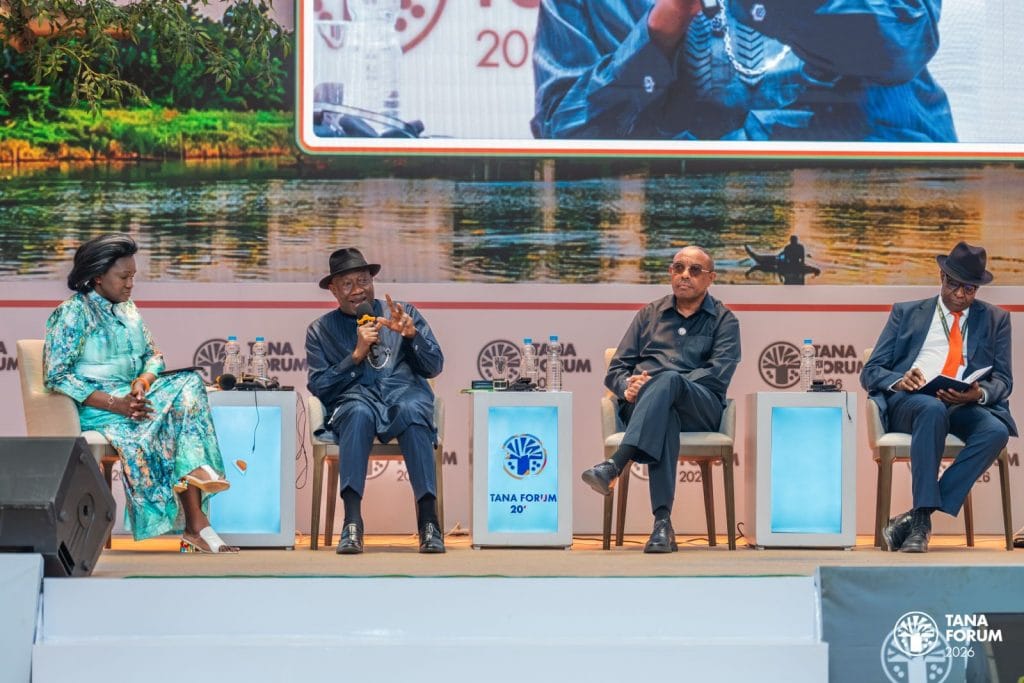
Former Ethiopian Prime Minister Hailemariam Desalegn and former Nigerian President Goodluck Jonathan told a gathering in Bahir Dar that Africa's economic and security prospects depend on implementing agreements already signed and on building homegrown technical capacity.
The two spoke on a high-level panel at the 12th Tana High-Level Forum on Security in Africa, according to a report by the state-affiliated Fana Media Corporation dated October 25, 2026. Kaire Mbuende, Director-General of Namibia's National Planning Commission, also took part. The discussion focused on how the continent could strengthen its economic sovereignty, collective security and standing in global affairs.
Hailemariam described continental integration as both a defensive and a strategic tool. He argued that slow implementation of existing agreements leaves African states exposed to outside pressure and to proxy conflicts.
"For us African integration is all about an economic shield," he said, as reported by Fana.
He called integration a source of geopolitical power and urged that it be accelerated.
Hailemariam, who chairs TradeMark Africa, cited the African Continental Free Trade Area (AfCFTA) as an example of commitments that have yet to deliver their promised benefits. "There is political will in terms of signing treaties, but there is no political will in terms of delivering them," he said, according to Fana.
He also addressed global demand for minerals used in the energy transition, which he called "opportunity minerals." He warned that without coordinated resource policies and closer cooperation among producing countries, competition over these assets could fuel instability. He cited the conflict in the Democratic Republic of the Congo as an example of that risk.
Jonathan focused on Africa's reliance on imported technology, expertise and industrial inputs. He said even modest infrastructure repairs can require foreign parts and specialists, and argued that without its own technical base the continent will remain a consumer rather than an industrializer.
"We can't talk about economic sovereignty without mentioning technological sovereignty," Jonathan said, according to Fana.
He pointed to India, South Korea and Singapore as countries where, in his view, research-intensive universities helped build domestic skills and drive industrial growth. He urged African governments to invest strategically in specialized higher education and research institutions. He also cautioned against borrowing mainly to finance consumption, saying loans should instead go toward productive assets and local capacity.
Mbuende argued that continental strength must be built in layers: capable national governments, effective regional bodies and a strong continent-wide organization. He defined economic sovereignty mainly as control over natural resources, with the aim of using them to industrialize, reduce poverty and create jobs.
His priorities included:
Mbuende also raised the high cost of borrowing faced by African countries. He said those costs remain high even though the continent's default rates are comparatively low.
A common thread ran through the session: the panelists argued that Africa's transformation will depend on turning existing agreements, resources and development plans into measurable results rather than on adding new commitments.
Source: Fana (state-affiliated)
Picture: Fana (state-affiliated)
Tech
Former African leaders have called for faster continental integration and stronger technological sovereignty, according to Ethiopia's state-run news agency. The available report summary did not name the leaders or detail their proposals.
Tech
The National Bank of Ethiopia has joined a pan-African payments system, according to Addis Standard. The terms, timeline and participating commercial banks have not yet been made public.

Tech
The state-owned Commercial Bank of Ethiopia is seeking suppliers for 32 direct-current fast chargers for electric vehicles, with bids due on November 10, 2026. The bank has not disclosed a budget, technical specifications or where the chargers will be installed.