Tech
IGAD Experts Urge Coordinated Digital Climate Advice for Farmers, Review Gender Gaps in Food Systems
By Addis Gazette Admin1 hour ago3 min read
Share:
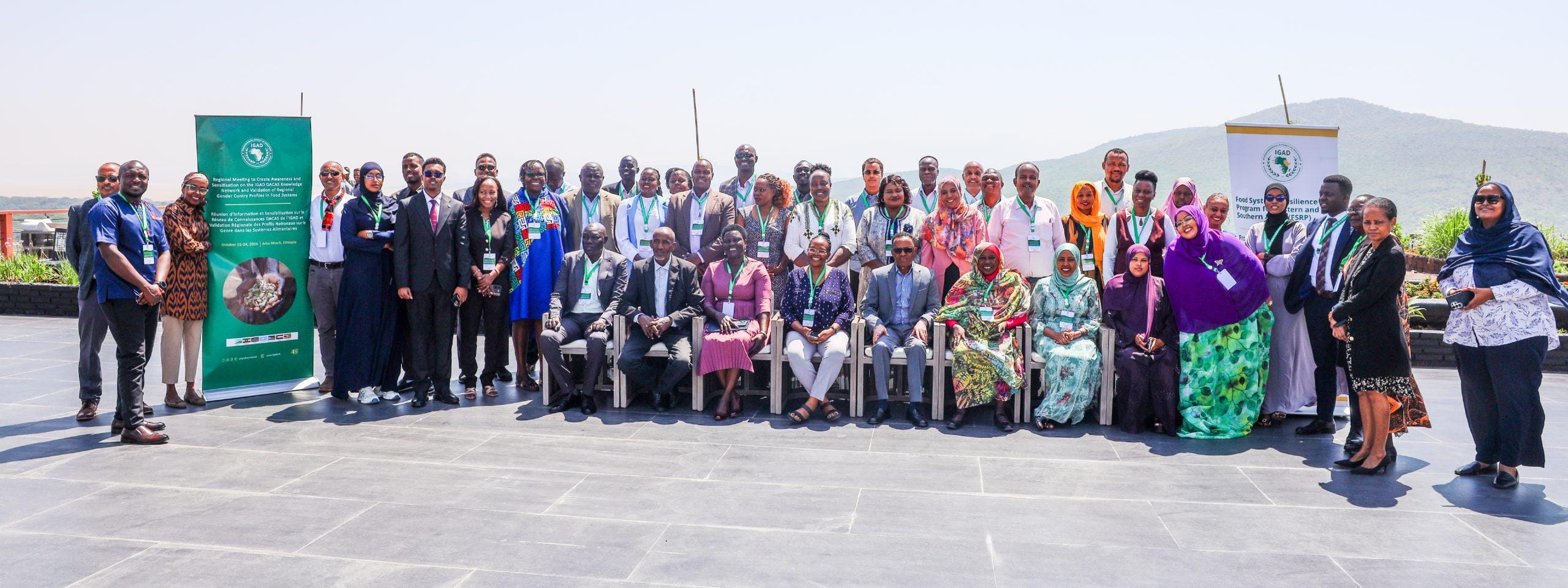
Agricultural and climate specialists from across the Horn of Africa and East Africa have called for national coordination structures and shared regional data standards to expand digital climate advice for farmers and herders. The recommendations came out of a regional meeting in Arba Minch, southern Ethiopia, that ended on 24 October 2026.
The Intergovernmental Authority on Development (IGAD) organised the four-day awareness and sensitisation programme, which began on 21 October. It was held under the bloc's World Bank-funded Food Systems Resilience Program (FSRP). Participants included technical experts from IGAD member states and partner institutions.
Smallholder farmers and pastoralists in the IGAD region face recurrent droughts, erratic rainfall and land degradation. Organisers said reliable local forecasts and farming guidance could help rural communities anticipate risks and adjust planting, herding and other decisions.
Abebaw Bihonegn, IGAD's Head of Mission to Ethiopia, spoke on behalf of Executive Secretary Workneh Gebeyehu. He said localised agro-climate information "is no longer a luxury," according to a statement published by IGAD.
Addisu Negash Melkie, who leads environment and climate change coordination at Ethiopia's Ministry of Agriculture, formally opened the meeting. He called for a shift from conventional farming towards climate-smart practices and digital tools, and said women and young people should be central to that change.
Delegations from Djibouti, Ethiopia, Kenya, Somalia, South Sudan, Sudan and Uganda presented their national work on digital agriculture and climate advisory services, including innovations and lessons learned. Technical partners also gave presentations.
A key focus was the IGAD Digital Agro Climate Advisory Services (DACAS) Knowledge Network, which the bloc wants to develop into a regional hub for exchanging knowledge on agriculture, livestock, natural resource management and climate resilience.
Participants noted rising demand among rural users for practical, actionable advice, and said existing national institutions and digital services could serve as a base for scaling up. Their recommendations included:
The meeting also validated a regional synthesis of national gender profiles in food systems. The profiles aim to document how women and men take part in the sector, where gaps exist and what action could close them.
According to IGAD, women play a large role in farm production, food processing and household food security but often have less access than men to land, credit, technology, climate information, jobs and markets. During the validation, stakeholders checked the findings against conditions in their own countries and added national perspectives. IGAD said the aim was to make the profiles more accurate and to encourage governments to adopt them for policy planning and implementation.
Delegates also visited sites around Arba Minch, including its groundwater forest, Lakes Abaya and Chamo, and Nech Sar National Park.
IGAD said continued cooperation among member states and partners is expected to widen access to agro-climate advisory services and support more gender-responsive policymaking across the region.
Source: IGAD (regional bloc)
Picture: IGAD (regional bloc)
Tech
Former African leaders have called for faster continental integration and stronger technological sovereignty, according to Ethiopia's state-run news agency. The available report summary did not name the leaders or detail their proposals.
Tech
The National Bank of Ethiopia has joined a pan-African payments system, according to Addis Standard. The terms, timeline and participating commercial banks have not yet been made public.

Tech
The state-owned Commercial Bank of Ethiopia is seeking suppliers for 32 direct-current fast chargers for electric vehicles, with bids due on November 10, 2026. The bank has not disclosed a budget, technical specifications or where the chargers will be installed.