Opinion
Amharic 'Wax and Gold' Wordplay Used to Satirise Abiy's Medemer, Report Says
Share:
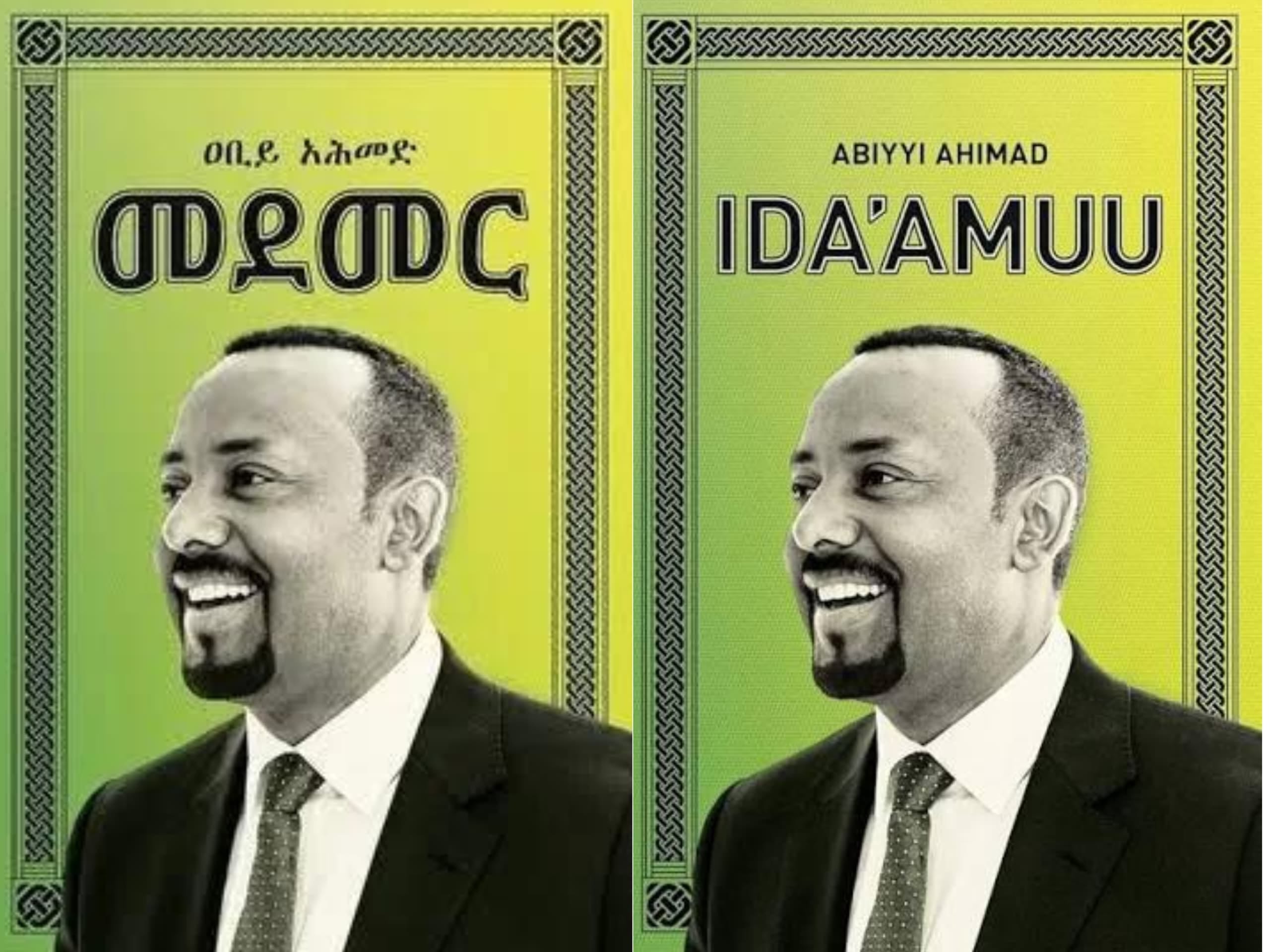
Prime Minister Abiy Ahmed's signature governing philosophy, Medemer, has become a target of satire in Addis Ababa, according to a report by the Somali news outlet Puntland Post. The report describes the term being reworked through sem-ena-werq, a long-established Amharic tradition of coded speech.
Medemer is an Amharic word usually translated as "synergy" or "coming together". Abiy published a book of that name in 2019, the same year he received the Nobel Peace Prize. The book has also been published in Afaan Oromo.
The Puntland Post report places Medemer in a pattern of Ethiopian leaders reshaping the political order around a defining idea. It cites three earlier examples:
Abiy came to power in 2018 after sustained protests, driven largely by Oromo and Amhara opposition movements, pushed the ruling Ethiopian People's Revolutionary Democratic Front (EPRDF), a coalition then dominated by the Tigray People's Liberation Front (TPLF), to change its leadership.
About a year after the book was published, war broke out in the northern Tigray region between the TPLF and federal forces. The fighting ended with the agreement signed in Pretoria in November 2022.
Federal forces have continued to fight armed groups in two other regions:
Critics cited in the report argue that these conflicts have shifted the government's agenda. In their view, a project of national unity has given way to one of political survival tied to Oromummaa, a concept of Oromo identity. The government has consistently rejected claims that it favours any ethnic group.
The satire draws on sem-ena-werq, or "wax and gold". In this Amharic poetic form, a deeper meaning, the "gold", is concealed beneath a surface meaning, the "wax". The form has long been used to voice criticism that would be risky to state openly.
Puntland Post describes a scene in a coffee house in central Addis Ababa. According to the report, a man asked to read the book's Amharic title aloud instead read it backwards, pronouncing it "Rimedeme". When asked to write the word down, he wrote the title's syllables in reverse order.
The resulting word is not a standard Amharic word. The man told the outlet that it carried a hidden message: that Medemer is making the Oromo the most powerful ethnic group in Ethiopia. The report does not explain how the reversed word conveys that meaning.
An Ethiopian linguist, who spoke to the outlet on condition of anonymity, suggested this may be the first time the device has been aimed at a single political term to portray it as empty.
The report rests on anecdotal accounts and includes no survey data, so it is unclear how widely the sentiment is shared. Wordplay and humour have a long history as channels of political commentary in Ethiopia, especially when open criticism carries risks.
The report does not include a response from the government to the claims about Medemer or ethnic favouritism.
Source: Puntland Post
Picture: Puntland Post
Opinion
A commentary published by the Middle East Forum asks whether the U.S. ambassador to Ethiopia is acting in line with President Donald Trump's foreign policy. Addis Gazette has not independently verified the claims suggested by its headline.

Opinion
Addis Ababa residents are using social media to urge a boycott of upscale butcheries after reports that meat prices at some outlets reached 6,000 birr per kilogram. The campaign reflects wider strain from Ethiopia's high cost of living.

Opinion
Ethiopian human rights lawyer Getachew Temare argues that the TPLF faction led by Debretsion Gebremichael lost much of its political, military and diplomatic standing within about a month of renewed fighting. He blames geopolitical miscalculation, military misjudgement and a loss of popular consent.